Kabisat: The Bold Y2K Font That Brings Retro-Futurism to Life
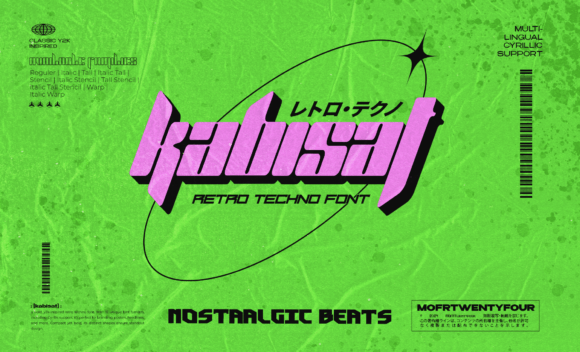
There’s a moment in every design project where the typeface either disappears into the background or steps forward to claim the spotlight. If you’re tired of playing it safe with neutral sans-serifs and predictable serifs, it might be time to look at something that refuses to blend in. Kabisat is a retro techno font that channels the electric energy of Y2K aesthetics—the kind of typography that feels like it was pulled from a futuristic movie poster circa 1999, but with the polish and versatility demanded by today’s creative landscape.
What makes Kabisat stand out isn’t just its visual weight. It’s the confidence baked into every curve and angle. The letterforms carry a daring boldness that commands attention without shouting, a quality that’s surprisingly hard to find in display fonts. There’s an unmistakable y2k flavor here—think chrome finishes, digital optimism, and that particular brand of futurism that imagined technology as sleek and slightly alien. Yet Kabisat doesn’t feel like a relic. It reads as forward-looking, which is precisely why it works so well for brands and creators who want to project innovation while nodding to a design era that’s currently experiencing a massive cultural resurgence.
A Typeface Built for Global Reach
One of the most practical strengths of Kabisat is its multilingual support and Cyrillic compatibility. If you’ve ever worked on a project that needed to cross language borders—whether that’s a product launch in Eastern Europe, a bilingual website, or social media content targeting diverse audiences—you know the frustration of finding a font that looks great in English but falls apart in other scripts. Kabisat sidesteps that problem entirely. Its character set spans a wide range of languages, so the visual identity you build doesn’t have to be compromised or rebuilt from scratch when you expand into new markets.
This kind of adaptability matters more than most people realize. Consistency across languages builds trust. When a brand looks the same in Moscow as it does in New York, it signals professionalism and intentionality. Kabisat makes that consistency achievable without requiring you to hunt for a matching companion typeface every time you need to support a new alphabet.
Twelve Variants, One Cohesive Vision
Font families with depth are a designer’s secret weapon, and Kabisat delivers twelve distinct variants that cover a surprising range of moods and applications. You’re not locked into a single weight or style—you get to explore different intensities, from lighter cuts that maintain readability in longer contexts to heavier versions that dominate headlines and poster layouts. Some variants push the geometric techno aesthetic further, while others soften just enough to work in editorial settings.
This variety within a single family solves a problem that trips up a lot of creative projects: visual fragmentation. When you pull fonts from multiple sources to build a hierarchy—different weights for headlines, subheads, and body copy—you risk creating a design that feels stitched together. With Kabisat’s twelve styles, the hierarchy feels native. The bold headline and the supporting text share the same DNA, which means your layouts look cohesive without extra effort.
Where Kabisat Actually Shines
Let’s talk about real applications, because a font is only as good as the problems it solves. Kabisat is a natural fit for branding and logo design, especially for companies in tech, gaming, music, streetwear, entertainment, or any space where standing out is non-negotiable. Its distinctive letterforms create logos that people remember—not because they’re gimmicky, but because they have genuine character. That kind of memorability is worth more than any marketing budget.
Packaging design is another area where this typeface excels. On a shelf crowded with safe, minimalist typography, a product set in Kabisat immediately signals something different. It works particularly well for limited editions, seasonal releases, or product lines targeting younger demographics who respond to visual energy and cultural references. The Y2K aesthetic isn’t just nostalgia—it’s become a visual shorthand for creativity and boldness.
For social media graphics, Kabisat brings the kind of visual punch that stops the scroll. Instagram posts, YouTube thumbnails, TikTok overlays, and promotional banners all benefit from type that has presence. When you’re competing against an endless feed of content, a font with genuine personality gives you an edge that generic alternatives simply can’t match.
Poster designs, T-shirt art, event invitations, and merchandise all tap into Kabisat’s strengths as a display font. These are contexts where type doesn’t just communicate information—it becomes the design. The unique character shapes and effects available across the font family give you creative options that go beyond simply typing words and hoping for the best.
Matching Typography to Your Project Goals
Choosing the right font style from Kabisat’s family depends entirely on what you’re trying to achieve. If you’re designing a headline for a tech startup’s landing page, you might reach for one of the bolder, more geometric variants. If you’re creating editorial layouts for a music magazine, a slightly lighter weight might give you the balance between impact and readability that you need. The key is to start with your project’s goal and work backward to the typeface, rather than falling in love with a font and forcing it into a context where it doesn’t belong.
Font pairing is another consideration worth your time. Kabisat’s techno personality is strong, so it pairs best with simpler companion fonts—clean sans-serifs for body copy, or minimal serif fonts when you want to create contrast. Avoid pairing it with other display fonts that compete for attention. Think of Kabisat as the lead vocalist; it needs a rhythm section, not another singer.
Readability is always worth testing before you commit. Display fonts like Kabisat are designed for impact at larger sizes, which means they work beautifully for headlines, titles, and short bursts of text. For longer paragraphs or small-scale applications, you’ll want to pair it with a more neutral body font. Print out samples, view them at actual size, and ask someone unfamiliar with the project to read them. Fresh eyes catch problems that designer eyes miss.
Practical Considerations Before You Dive In
Before integrating any premium font into your workflow, take a few minutes to review the licensing terms. Kabisat is a commercial font, which means the license you purchase determines how you can use it. If you’re a freelance designer working on client projects, make sure the license covers that use. If you’re a small business owner building your own brand, confirm that the license extends to merchandise and digital products if those are in your plans. Understanding these details upfront saves headaches later.
It’s also worth spending time exploring all twelve font styles before settling on one. Many designers default to the bold or regular weight without realizing that the family includes cuts that might suit their specific application better. Load the fonts into your design software, set some sample text in different variants, and compare them side by side. The differences between styles are subtle but meaningful, and the right choice can elevate a design from good to genuinely striking.
Kabisat brings something rare to the table: a typeface with a strong point of view that doesn’t sacrifice practicality. Its multilingual support, extensive style range, and bold visual identity make it a versatile tool for anyone working in branding, editorial design, web design, or creative marketing. Whether you’re building a brand identity from scratch or looking for a display font that injects energy into existing projects, Kabisat offers a distinctive voice that’s hard to replicate with safer alternatives. The future it imagines might be retro, but the impact it delivers is entirely present tense.