Agony: A Gothic Font That Wields Drama and Vintage Charm
There's a certain power in typography that doesn't just communicate—it performs. Some fonts whisper; others command attention from across the room. Agony belongs firmly in the latter camp. This vintage gothic display font doesn't tiptoe around your design projects. It walks in wearing a velvet cloak and demands you take notice. If you've been searching for a typeface that bridges the gap between archaic grandeur and contemporary edge, this ornamental serif might be exactly what your next creative venture needs.
What Makes Agony Visually Striking
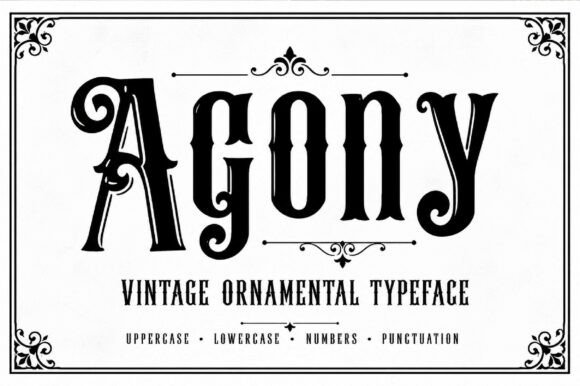
At its core, Agony draws from classical gothic typography—the kind you'd find etched into old cathedral signage, illuminated manuscripts, and Victorian-era poster art. But rather than simply replicating those historical forms, the font injects a dose of vintage warmth and boldness that feels distinctly modern. The letterforms are heavy and assertive, with dramatic curves that sweep across each character like brushstrokes on a canvas. Elaborate serif detailing adds layers of visual complexity, giving every word you set in Agony a sense of depth and craftsmanship.
What really sets this display font apart is how it balances ornamentation with readability. Decorative typefaces often sacrifice clarity for style, but Agony manages to keep its characters legible even while dripping with personality. The uppercase letters, in particular, carry an almost heraldic quality—think coat of arms, album cover art, or the masthead of an underground magazine. Lowercase letters maintain that same dramatic flair but in a slightly more restrained register, making them useful for body-adjacent text or secondary messaging.
The font also includes numbers and punctuation, all rendered in the same decorative gothic style. This means you can maintain visual consistency across every element of your design, whether you're typesetting a price tag, a date, or a full paragraph of editorial copy.
Where This Typeface Truly Shines
Agony isn't the kind of font you'd use for a corporate annual report or a medical brochure. It's a creative font built for projects that want to evoke emotion, atmosphere, and a sense of theatricality. Here's where it really comes alive:
- Poster design and album covers: Music genres like metal, darkwave, and gothic rock have long relied on ornamental typography to set the tone. Agony fits naturally into this visual tradition, giving your artwork an immediate sense of gravitas and style.
- Branding and logo design: For businesses with a dark, artisanal, or vintage identity—think craft distilleries, tattoo studios, alternative fashion brands, or specialty bookstores—this font can anchor a brand identity that feels both timeless and distinctive.
- Packaging design: Product packaging for specialty goods, limited-edition releases, or niche consumer products benefits enormously from a typeface that tells a story before the customer even reads the label.
- Social media graphics: Instagram posts, YouTube thumbnails, and Pinterest pins all compete for split-second attention. A bold, ornamental display font like Agony can stop a scrolling thumb in its tracks.
- Editorial layouts: Magazine headers, book covers, and blog titles gain instant authority when set in a typeface with this much visual weight.
- Merchandise and invitations: From event posters to wedding invitations with a gothic twist, Agony brings a level of artistry that generic fonts simply can't match.
- Web design and digital products: Used sparingly and strategically—think hero sections, landing page headers, or digital product covers—this typeface adds dramatic punctuation to an otherwise clean layout.
Pairing Agony with Other Fonts
One of the most practical considerations when working with any ornamental display font is figuring out what to pair it with. Because Agony carries so much visual personality on its own, it works best alongside typefaces that play a supporting role rather than competing for attention.
A clean sans serif font makes an excellent companion. Think of something like a geometric sans or a humanist typeface for body copy, subheadings, or UI elements. The contrast between Agony's ornate serifs and the simplicity of a sans serif creates a natural hierarchy that guides the reader's eye without overwhelming them.
For projects with a more traditional or editorial feel, pairing Agony with a classic serif font for body text can create a cohesive, layered aesthetic. Just be sure the secondary serif is significantly lighter and more restrained—otherwise the page can feel visually cluttered.
Script fonts and handwritten fonts can also work in small doses, particularly for accent text, pull quotes, or decorative labels. The key is restraint. Agony already does a lot of heavy lifting visually, so any supporting typeface should complement rather than amplify that drama.
Always test your font pairings in context. Set real content, not just placeholder text. View your designs at multiple sizes and on different screens. What looks striking at 72-point on a poster might become illegible at 14-point on a mobile device. This kind of practical testing separates polished, professional work from designs that look good only in a mockup.
Improving Your Visual Communication
Typography is one of the most underestimated tools in a designer's toolkit. The right typeface doesn't just make words look attractive—it shapes how an audience feels about those words. Agony, with its strong gothic demeanor and vintage charm, communicates intensity, artistry, and a certain rebellious elegance. For brands and creators whose identity leans into dark aesthetics, historical references, or countercultural style, this font becomes more than a design asset. It becomes a shorthand for an entire visual language.
Visual consistency is another major benefit. When you commit to a typeface like Agony as part of your brand identity, you create a recognizable thread that runs through every touchpoint—from your website headers to your packaging to your social media templates. Over time, that consistency builds brand recognition. People start to associate that distinctive gothic lettering with your work, even before they read a single word.
There's also the matter of professional presentation. In competitive markets—whether you're selling handmade goods online, launching a music project, or building a lifestyle brand—the details matter. A thoughtfully chosen font signals intentionality. It tells your audience that you care about craft, about aesthetics, about the experience of engaging with your work.
Practical Considerations Before You Commit
Before integrating any premium font into your workflow, a few practical steps will save you headaches down the road. First, review the full character set. Agony includes uppercase, lowercase, numbers, and punctuation, but confirm that it covers any special characters or multilingual glyphs your project might require.
Second, think about licensing. If you're using the font for commercial purposes—client work, merchandise, paid digital products—make sure your license covers that use. Most premium font licenses distinguish between personal and commercial use, and some have specific restrictions around embedding in apps or distributing editable files.
Third, consider readability at your intended size. Display fonts like Agony are designed for headlines, logos, and large-format text. They're not meant for long paragraphs or small body copy. Use them where they'll have the most impact, and pair them with a more neutral typeface for everything else.
Finally, don't be afraid to experiment. Set your headlines in Agony, try it at different scales, play with letter spacing and color. The best typography decisions come from hands-on exploration, not just reading spec sheets. Give yourself room to discover how this typeface behaves in your specific creative context, and you'll unlock its full potential as both a design tool and a storytelling device.